

Treasures of the Uriach Foundation
The Foundation manages more than 12,000 books on the history of the health sciences and over 30,000 archival documents related to the history of the company. Among all this material, we can find certain treasures that stand out for their importance, uniqueness, or representativeness. In this section, you will be able to access some of these works, which we hope you will find of interest.
Treasures of the Library
-
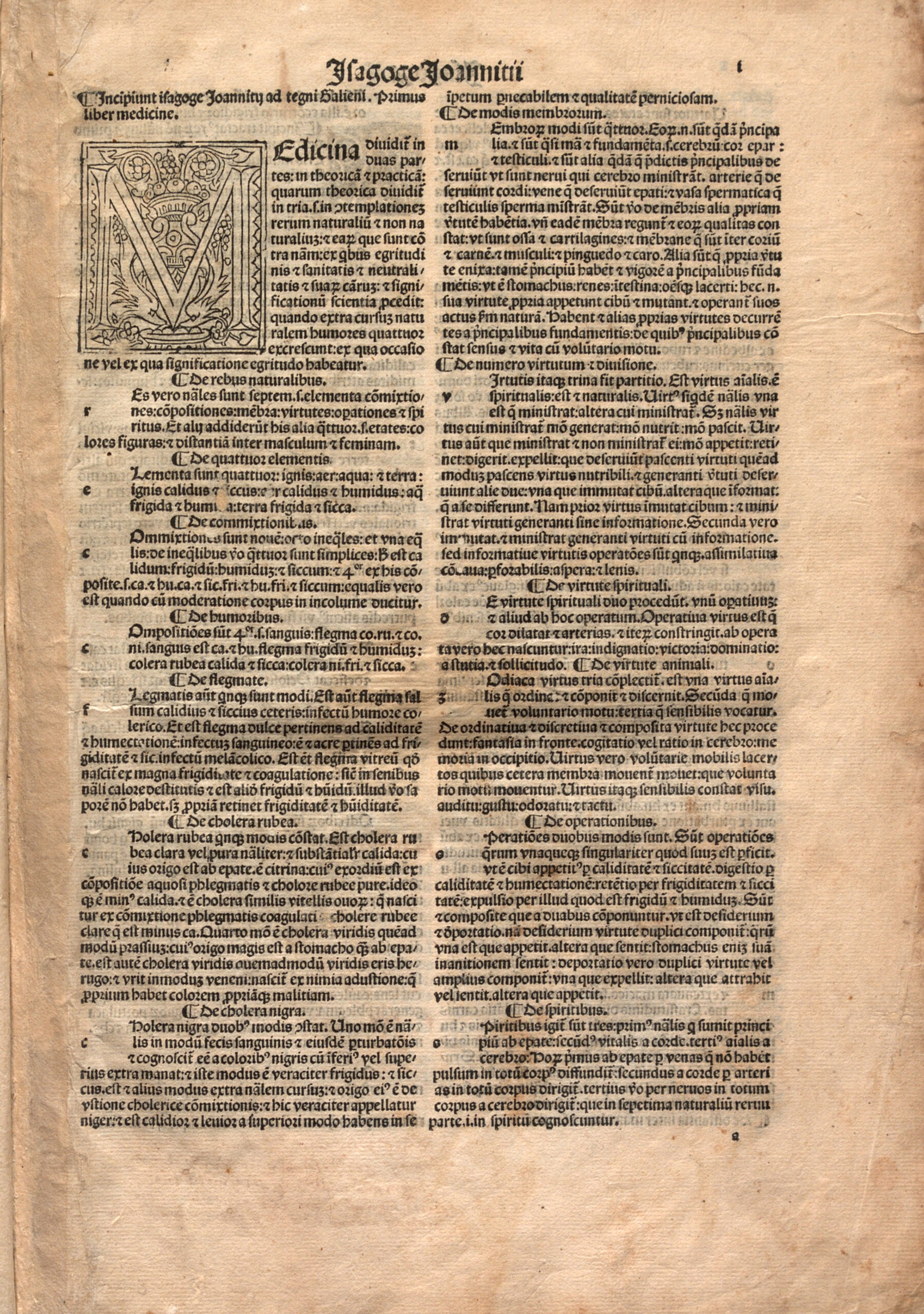
Articella, 1493
The “Articella” was written in Baghdad by the physician, writer, translator, and scientist Hunayn bin Ishaq, better known in the West as Iohannitius. It contains a synthesis of classical Greek medical works mainly treatises by Hippocrates (5th–4th century BC) and Galen (1st century AD), among other authors and was used as a textbook and reference manual between the 13th and 16th centuries.
This is an incunabulum edition, printed during the early years of the modern printing press. These types of editions, of which only a few copies were produced, are small works of art that imitated every detail of handwritten books, with printers who were themselves artists expressing their craft through their work.
In short, a highly valuable book that, like other incunabula, has become a historic publication that, for the first time, made culture accessible to everyone.
-
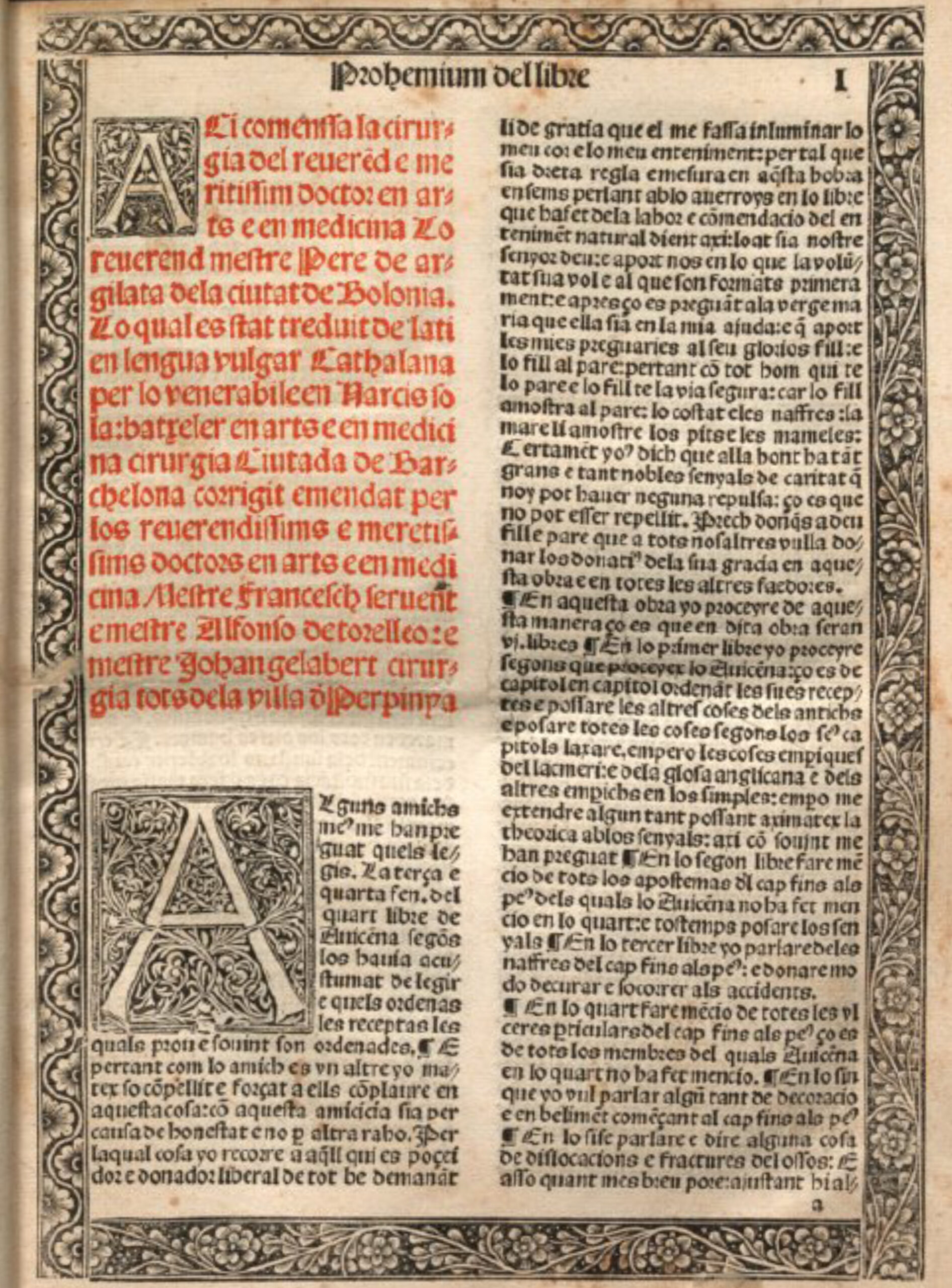
Cirugía, 1503 (Pere d’Argilata)
Renaissance medical work written by the Italian surgeon and anatomist Pietro d’Argelata, noted for his dedication to surgery and to teaching medicine at the University of Bologna, one of Europe’s most prestigious medical centers at the time. First published in 1498, this is probably his most celebrated work, in which he provides detailed descriptions of the rules for cranial trepanation, among other surgical techniques. The relevance of this work led to its translation into several languages, including a Catalan version by the physician, royal surgeon, and professor Nacís Solà.
Its printer, Johannes Rosenbach, was one of the most important itinerant typographers of the late 15th and early 16th centuries, and for forty years he was the leading printer in Catalonia.
This work not only contributed great scientific value to the field of health sciences through its innovation and subsequent influence on professionals in the discipline, but also holds significant historical value, as it is considered one of the first medical texts written in Catalan.
-
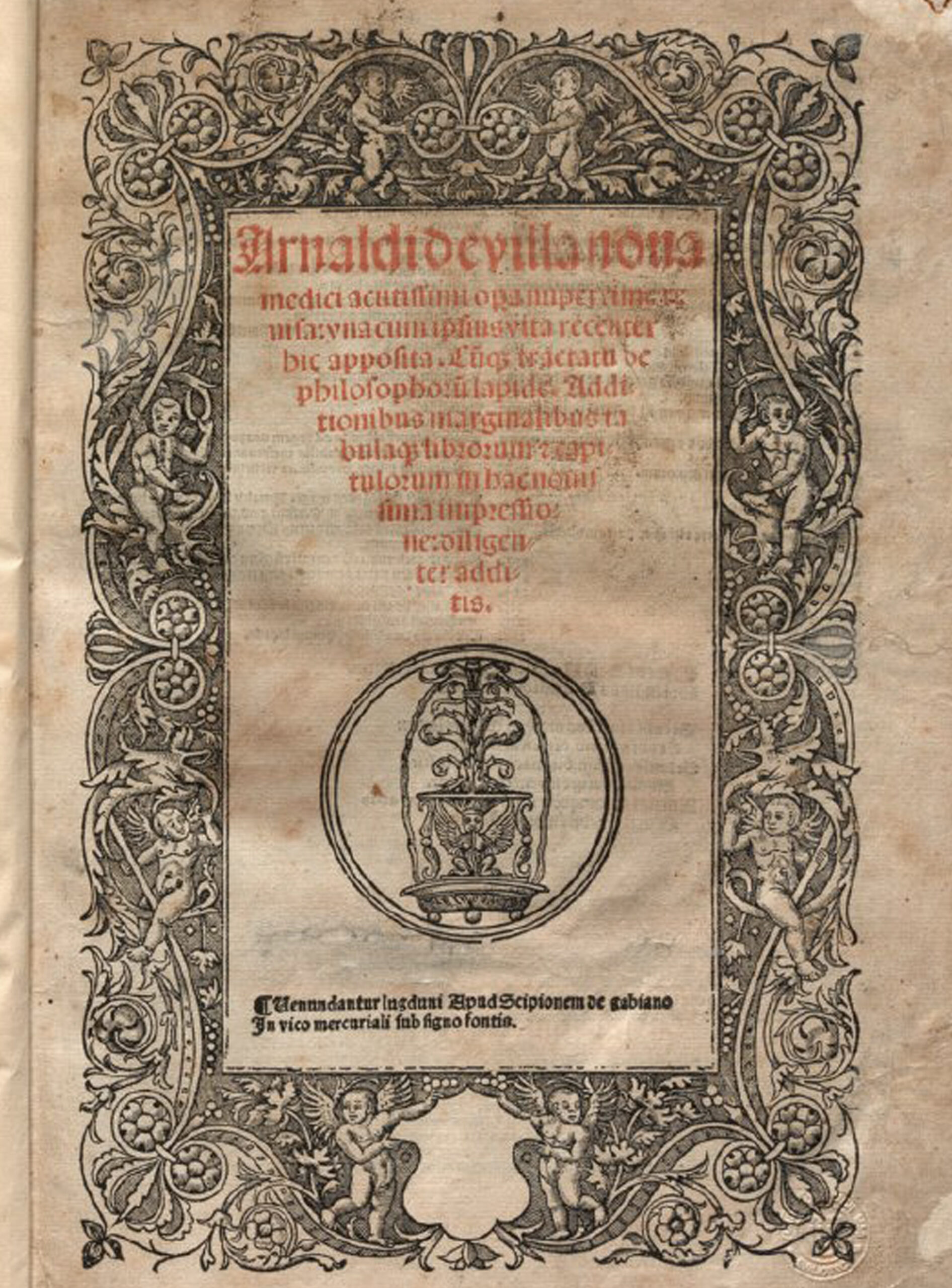
Opera nuperrime reuisa, 1532 (Arnau de Vilanova)
This work is a compilation of texts by Arnau de Vilanova, who was probably the most influential physician of the medieval Latin world. Arnau wrote fundamental treatises for European medicine of his time, including texts on general pathology, and played a prominent role in the political and religious debates of his era.
Published in 1532 under the title “Opera Nuperrime”, this compilation includes Arnau de Vilanova’s commentary on Galen’s “De inaequali intemperie”, Mayno de Mayneri’s “Regimen sanitatis”, the “Regimen sanitatis Salernitanum”, and his translation of Kustā ibn Lūka’s “De phisicis ligaturis”.
After his death, Arnau de Vilanova was remembered as one of the great thinkers of his time: physician to kings and popes, a visionary in the field of medicine, and a critic and intellectual who contributed significantly to the currents of thought that shaped medieval and Renaissance Europe.
-
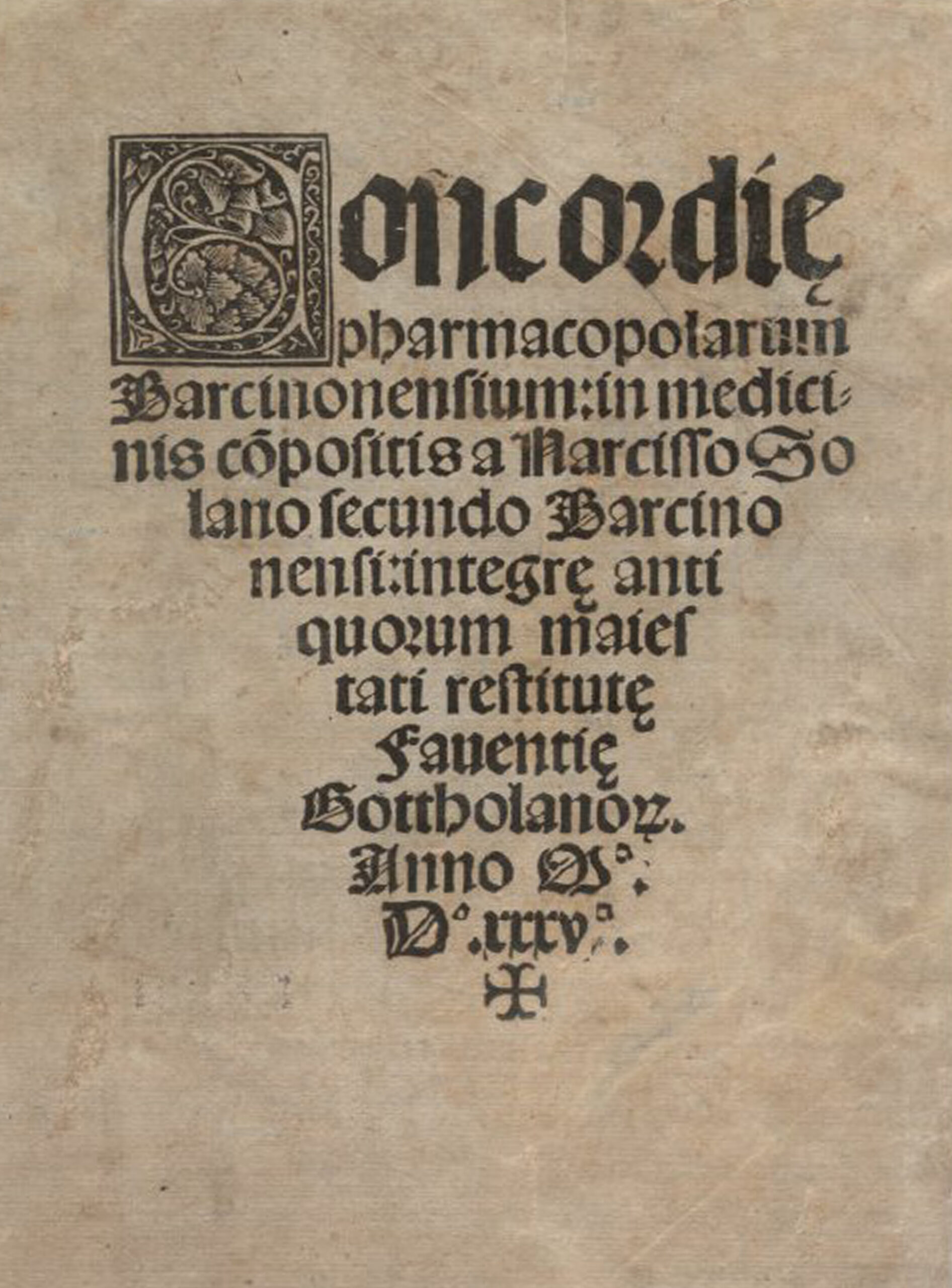
Concordia Pharmacopolarum Barcinonensium, 1535
Popularly known as the Concordia of Barcelona, this publication is one of the most outstanding works in the history of health sciences in Spain. It was a pioneering text in the regulation of apothecaries’ activity, first in Barcelona and later throughout the territory, and was the second pharmacopoeia published in the world, preceded only by that of Florence, printed a few years earlier.
Three editions of the Concordia were produced, of which this is the second, published in 1535. Today, only two known copies are preserved worldwide, making this edition an exceptional and unique piece.
The work contains 370 formulas comprising 617 drugs, including opiates, electuaries, lozenges, preserves, syrups, infusions and decoctions, pills, laxatives, powders, collyria, oils, ointments, and plasters.
Today, the Concordia is considered a work of incalculable scientific and historical value, one of the most significant pieces of our bibliographic and cultural heritage, and a unique publication worldwide due to the extreme scarcity of surviving copies.
-
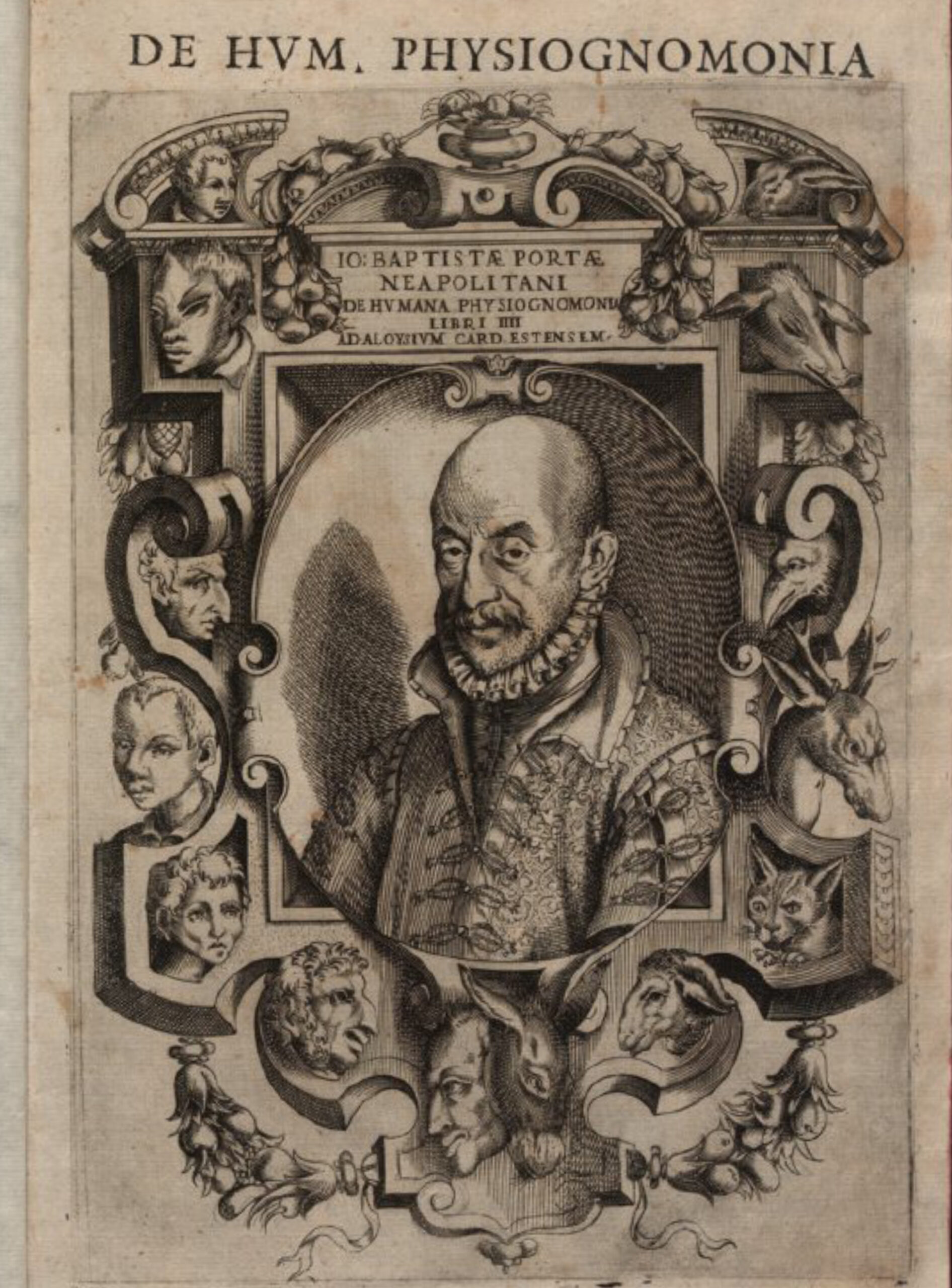
De humane physiognomonia, 1586 (Giambattista della Porta)
This is the first edition, published in 1586, of “De humanae physiognomonia”, a landmark work in the field of physiognomy written by the Neapolitan Giambattista della Porta. A scientist, scholar, and playwright, della Porta was a pioneer in this Aristotelian discipline, which sought to interpret individuals’ personalities through their facial features.
The work, one of the earliest illustrated publications on physiognomy, includes engravings that draw comparisons and explore connections between the physical characteristics and behaviors of both humans and animals, in an attempt to better understand human nature from different perspectives.
Although the Roman Catholic Church viewed this discipline with skepticism, considering it a pseudoscience, physiognomy thrived thanks to works such as this, which became widely known and influenced subsequent generations of scholars. Evidence of its impact can be seen in the numerous editions published in 1593, 1601, 1602, 1618, and 1650.
-
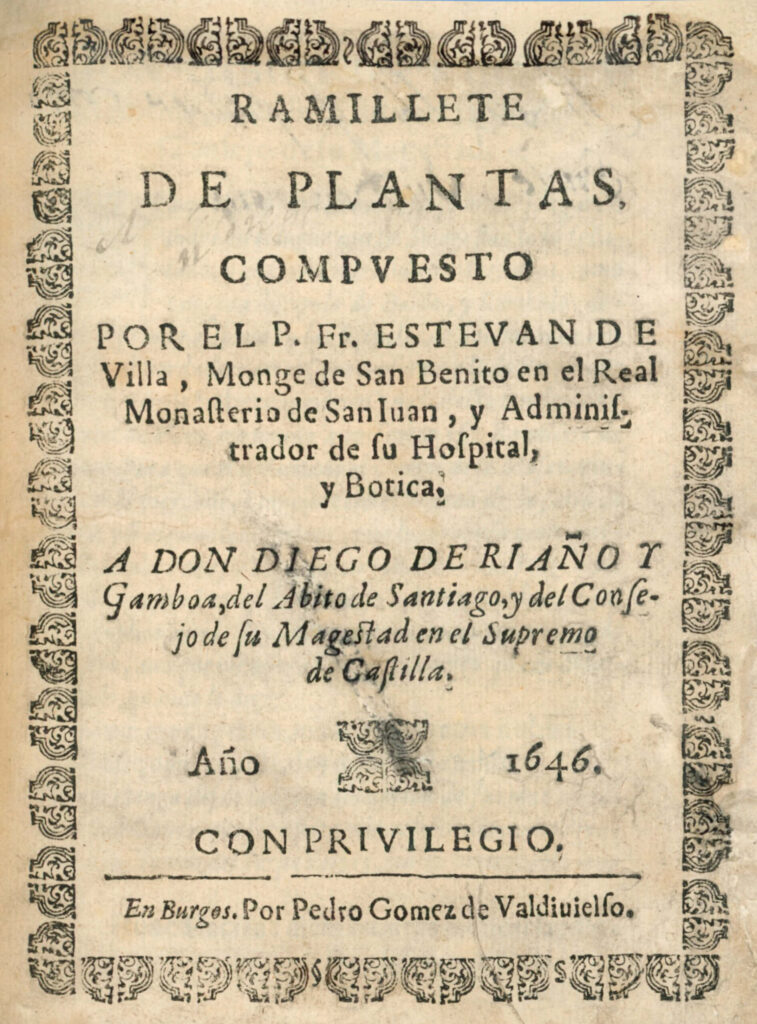
Ramillete de plantas, 1646 (Esteban de Villa)
Second edition of the work by Friar Esteban de Villa, first published in 1636. The author was a Benedictine monk, pharmacist, and writer who practiced pharmacy at the Hospital of San Juan de Burgos during the 17th century.
“Ramillete de Plantas” includes general information about plants, the use of simples, distillation methods for obtaining medicinal waters and oils, and a recipe book of the usual compounds of the period. It also contains a section devoted to astrology, describing the importance attributed to the stars, equinoxes, and hours of the day in the gathering of plants, which was believed to influence their therapeutic virtues.
This work was highly influential in its time in the botanical and pharmaceutical fields, as medicinal preparations in the 17th century continued to be predominantly plant-based.
-
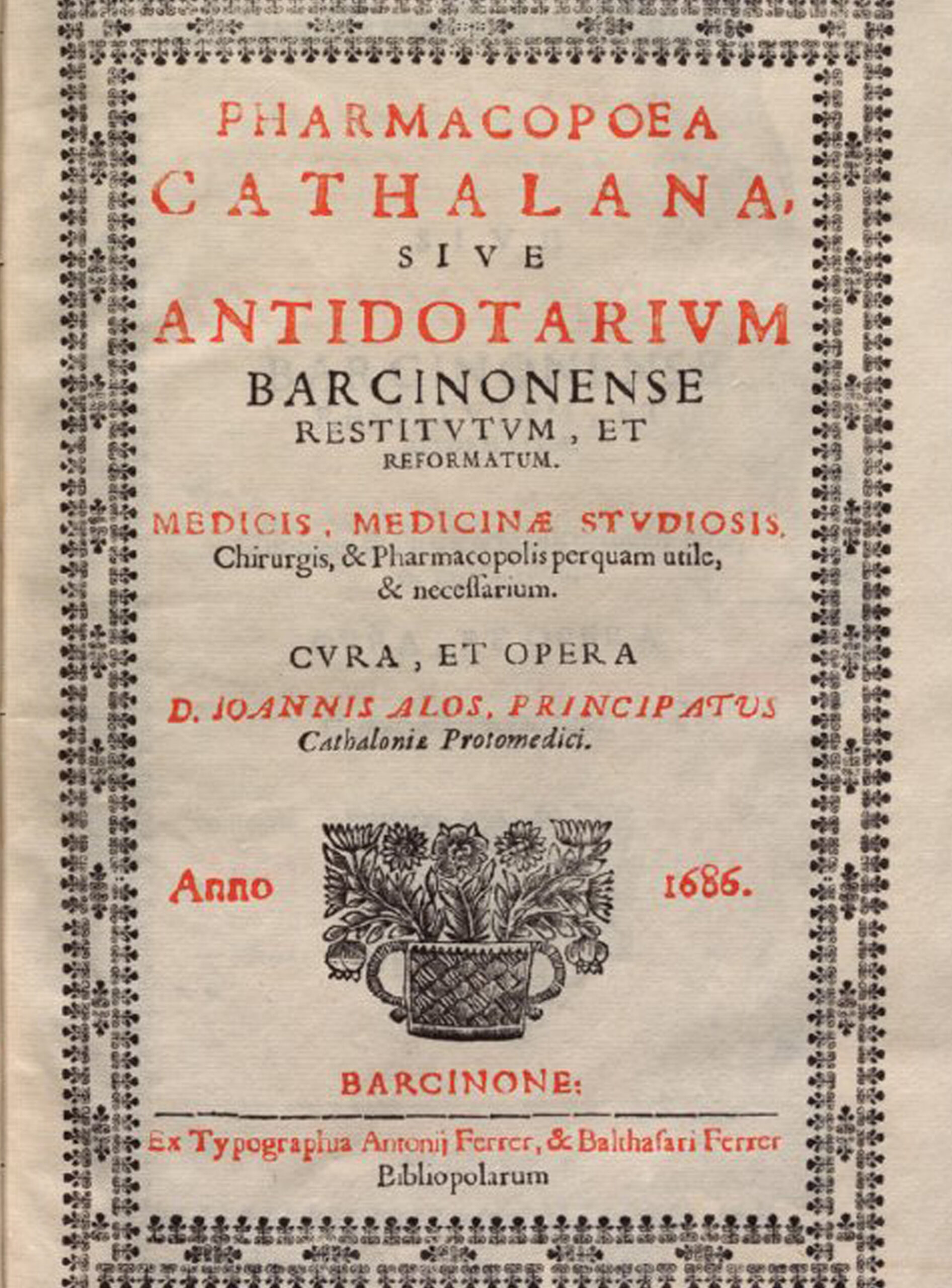
Pharmacopoea Cathalana, 1686 (Joan d’Alòs i Serradora)
This work, published in Barcelona in 1686, is an antidotary or pharmacopoeia that records the art of preparing and using medicines of the time. It was written by the physician Joan d’Alòs, professor of medicine and pharmacy, and representative of the Protomedicato of the Principality of Catalonia, an institution created in the 15th century to oversee the practice of health professions (physicians, surgeons, and pharmacists) as well as to carry out teaching and training functions for these professionals.
Despite the importance of institutions such as the Protomedicato, the “Pharmacopea Cathalana” is considered a non-official pharmacopoeia, since it was not produced in agreement with the College of Apothecaries. Nevertheless, Joan d’Alòs sought to remedy the lack of copies of the third edition of the Concordia, the only reference for nearly a century, and to provide an updated work for the practice of the pharmaceutical profession.
-
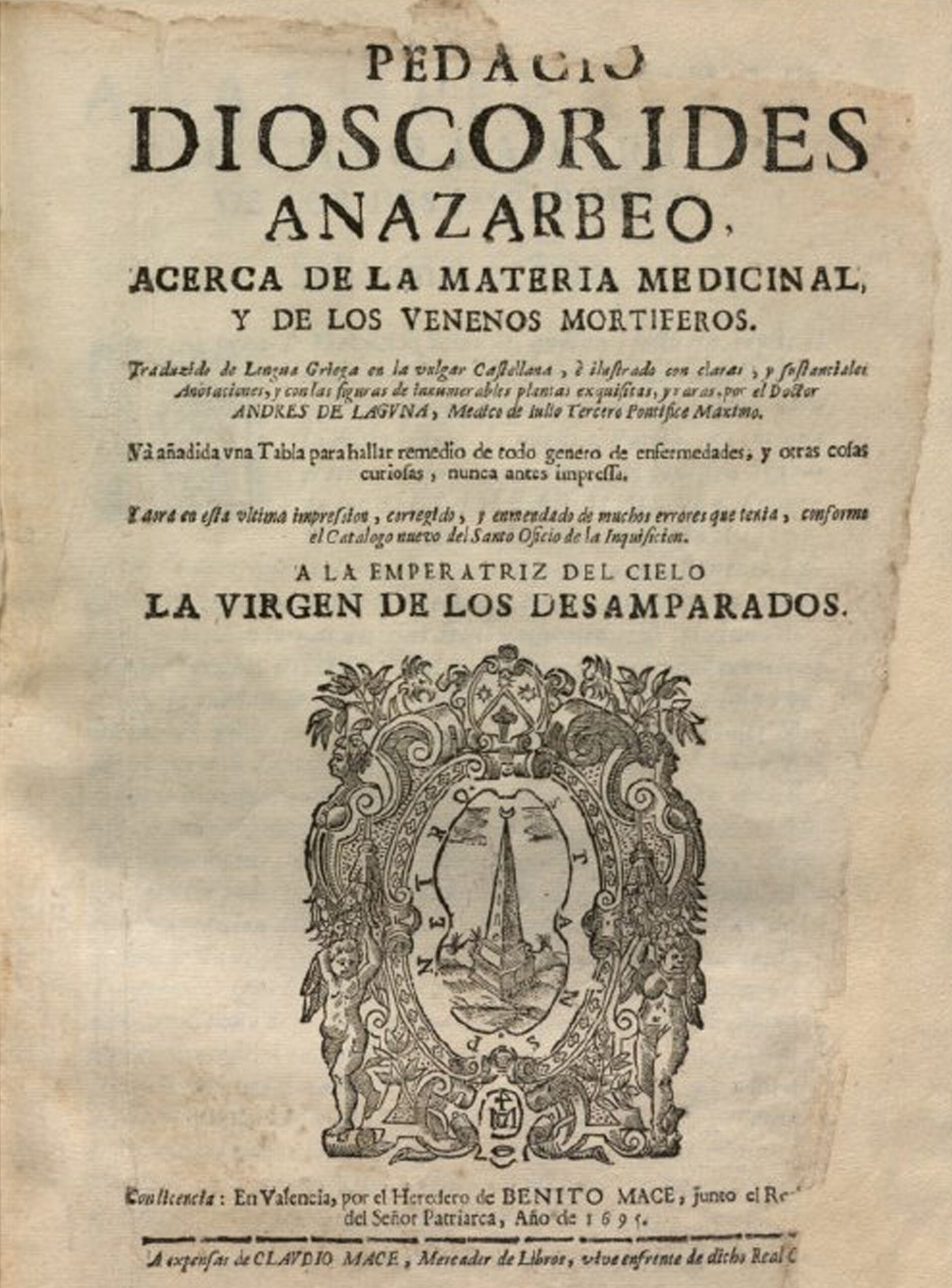
Acerca de la Materia Medicinal, 1695 (Pedacio Dioscórides Anazarbeo)
1695 edition of “De Materia Medica”, written by the physician, pharmacologist, and botanist Pedanius Dioscorides of Anazarbus (c. 40–c. 90 AD), considered the father of pharmacology. The work was a precursor to modern pharmacopoeias and is regarded as one of the most influential books on plants in history. It describes around 600 medicinal plants, some 90 minerals, and about 30 substances of animal origin.
Unlike other classical works, this book enjoyed enormous diffusion during the Middle Ages, both in its original Greek and in translations into other languages such as Latin and Arabic.
Its translator and commentator, Andrés Laguna, was responsible for turning this work into the first modern treatise on materia medica published in Spain, and the most widely used in the country between the 16th and 18th centuries.
-
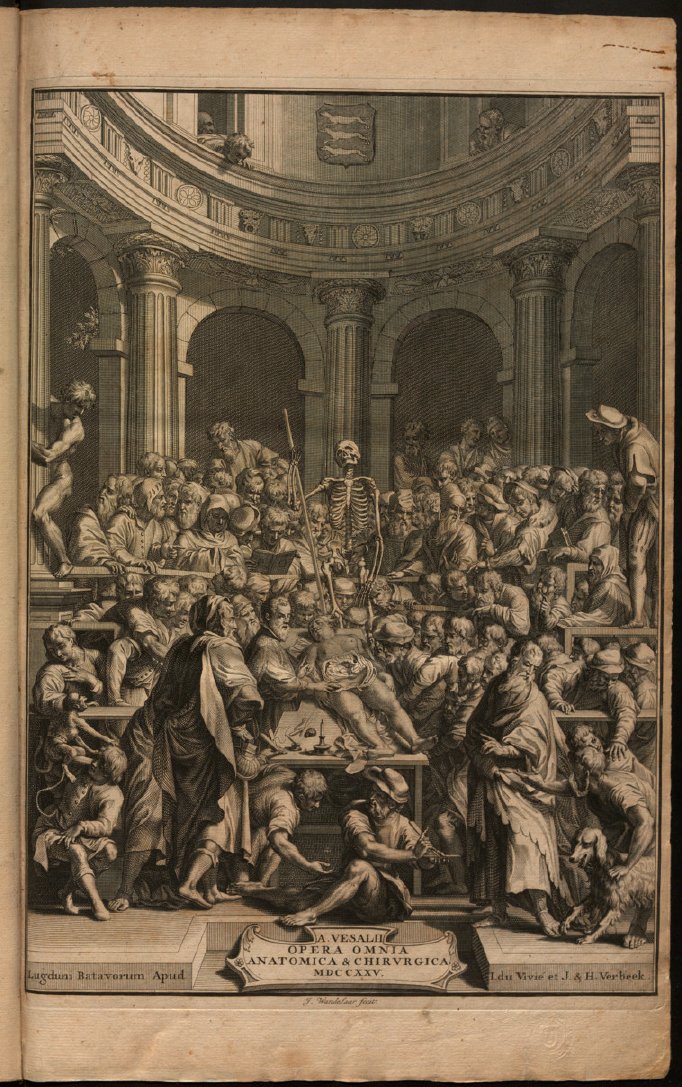
Opera Omnia Anatomica et Chirurgica, 1725 (Andreas Vesalius)
“Opera Omnia Anatomica et Chirurgica” is a late edition of the work “De humani corporis fabrica”, first printed in 1543. Its author, Andreas Vesalius, was a Belgian anatomist and physician, considered one of the founders of modern anatomy. This is his most influential work, one of the most beautiful scientific books of all time, which revolutionized medicine and the health sciences in the 16th century.
The book examines the structure of the human body and provides the first complete description in the history of human anatomy, detailing bones, joints, muscles, the heart, blood vessels, the nervous system, and the organs of the abdomen, thorax, and brain.
A work that modernized not only anatomy but scientific teaching in general, showing medical students that human anatomy could only be learned through the dissection and observation of the human body.
-
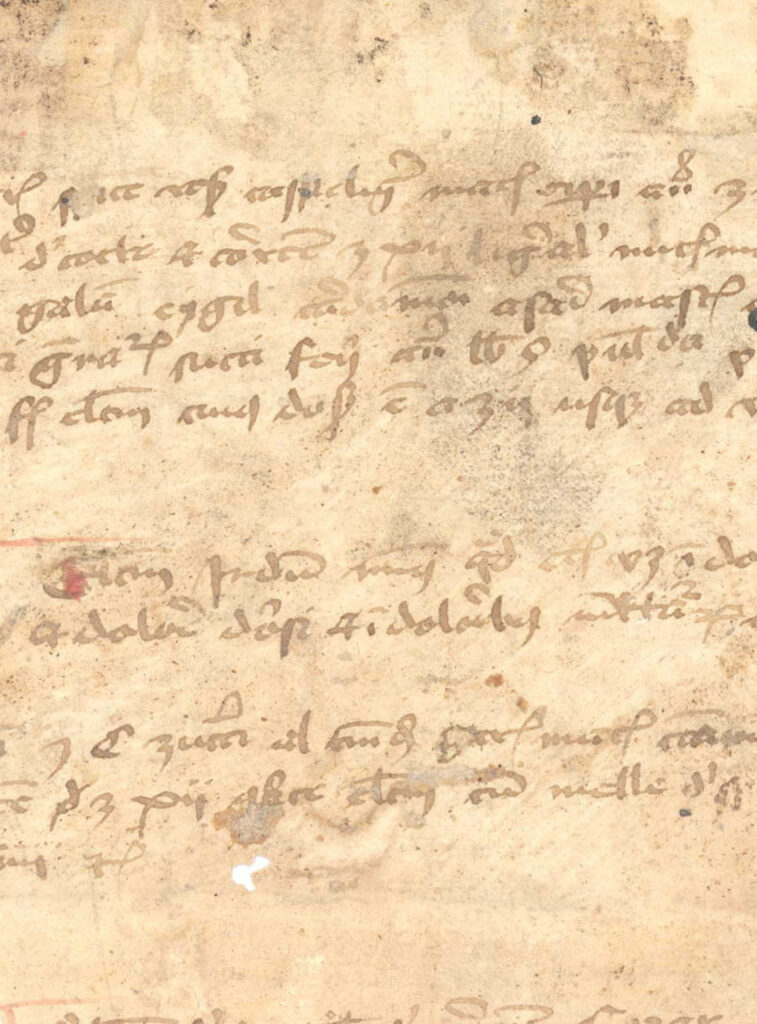
Manuscript of Recipes, 14th Century
Manuscripts constitute an important part of our collection, and among them we highlight this small compendium of handwritten recipes, written in Latin, which contains information on the preparation of syrups, ointments, and remedies intended to cure or alleviate some of the most common illnesses and health problems of the time. Following paleographic and content analysis, this set of recipes has been dated to approximately between the late 14th and early 15th centuries. Despite the time elapsed since its creation, the state of preservation of these recipes is good, allowing us to gain first-hand knowledge of aspects of society, traditions, and customs of the period, at the transition between the Middle Ages and the Modern Era.