
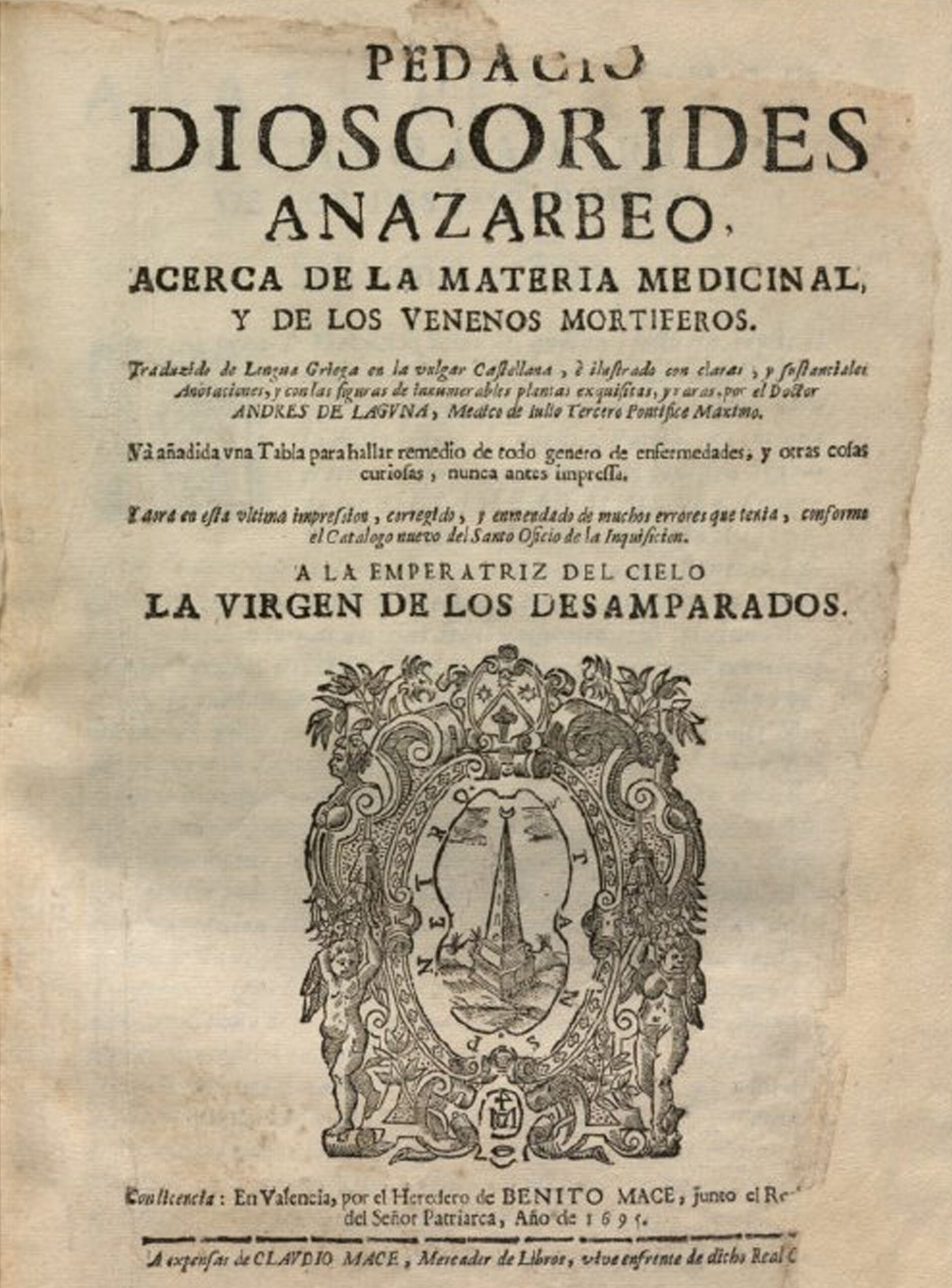
1695 edition of “De Materia Medica”, written by the physician, pharmacologist, and botanist Pedanius Dioscorides of Anazarbus (c. 40–c. 90 AD), considered the father of pharmacology. The work was a precursor to modern pharmacopoeias and is regarded as one of the most influential books on plants in history. It describes around 600 medicinal plants, some 90 minerals, and about 30 substances of animal origin.
Unlike other classical works, this book enjoyed enormous diffusion during the Middle Ages, both in its original Greek and in translations into other languages such as Latin and Arabic.
Its translator and commentator, Andrés Laguna, was responsible for turning this work into the first modern treatise on materia medica published in Spain, and the most widely used in the country between the 16th and 18th centuries.