
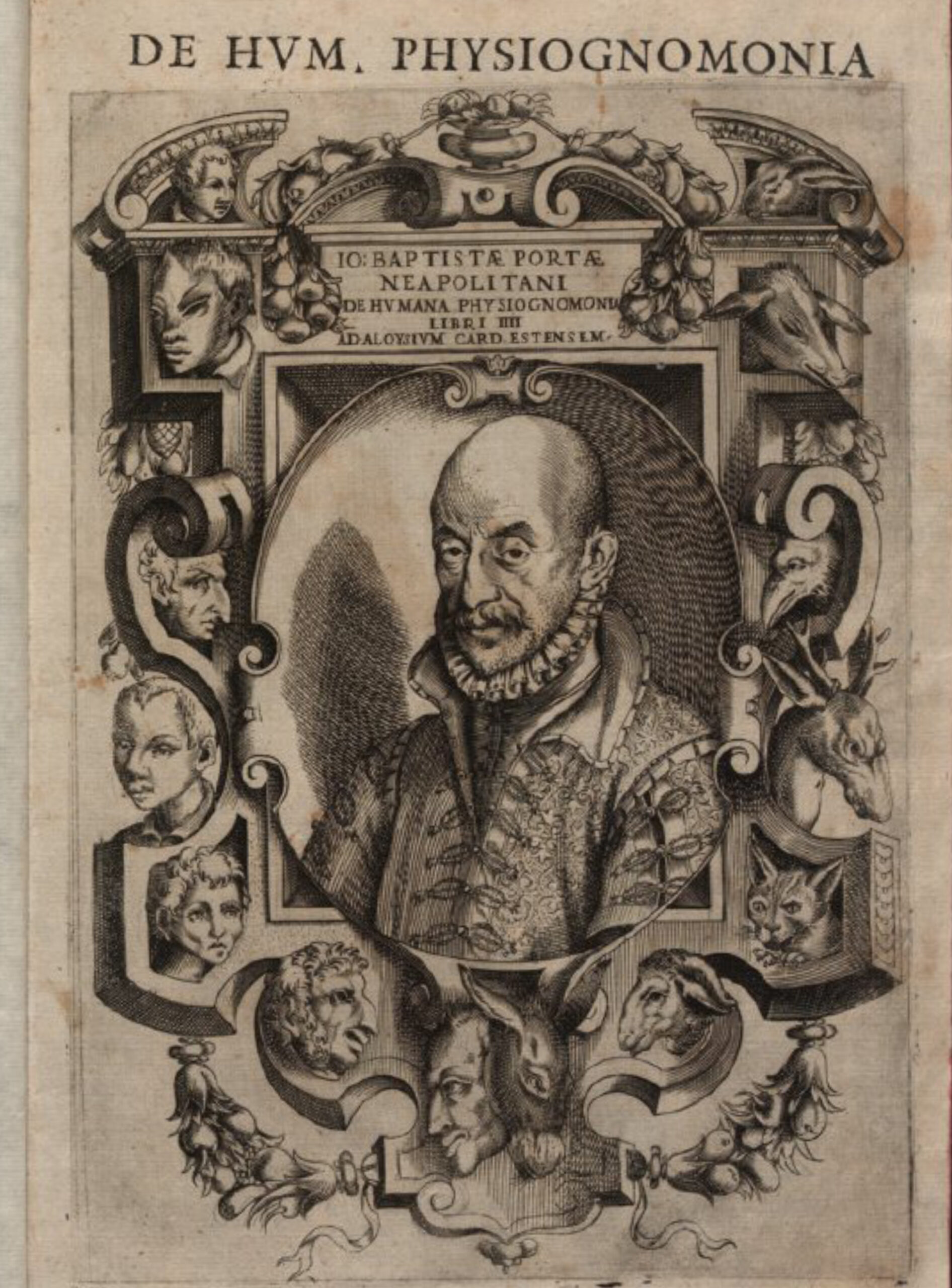
This is the first edition, published in 1586, of “De humanae physiognomonia”, a landmark work in the field of physiognomy written by the Neapolitan Giambattista della Porta. A scientist, scholar, and playwright, della Porta was a pioneer in this Aristotelian discipline, which sought to interpret individuals’ personalities through their facial features.
The work, one of the earliest illustrated publications on physiognomy, includes engravings that draw comparisons and explore connections between the physical characteristics and behaviors of both humans and animals, in an attempt to better understand human nature from different perspectives.
Although the Roman Catholic Church viewed this discipline with skepticism, considering it a pseudoscience, physiognomy thrived thanks to works such as this, which became widely known and influenced subsequent generations of scholars. Evidence of its impact can be seen in the numerous editions published in 1593, 1601, 1602, 1618, and 1650.